
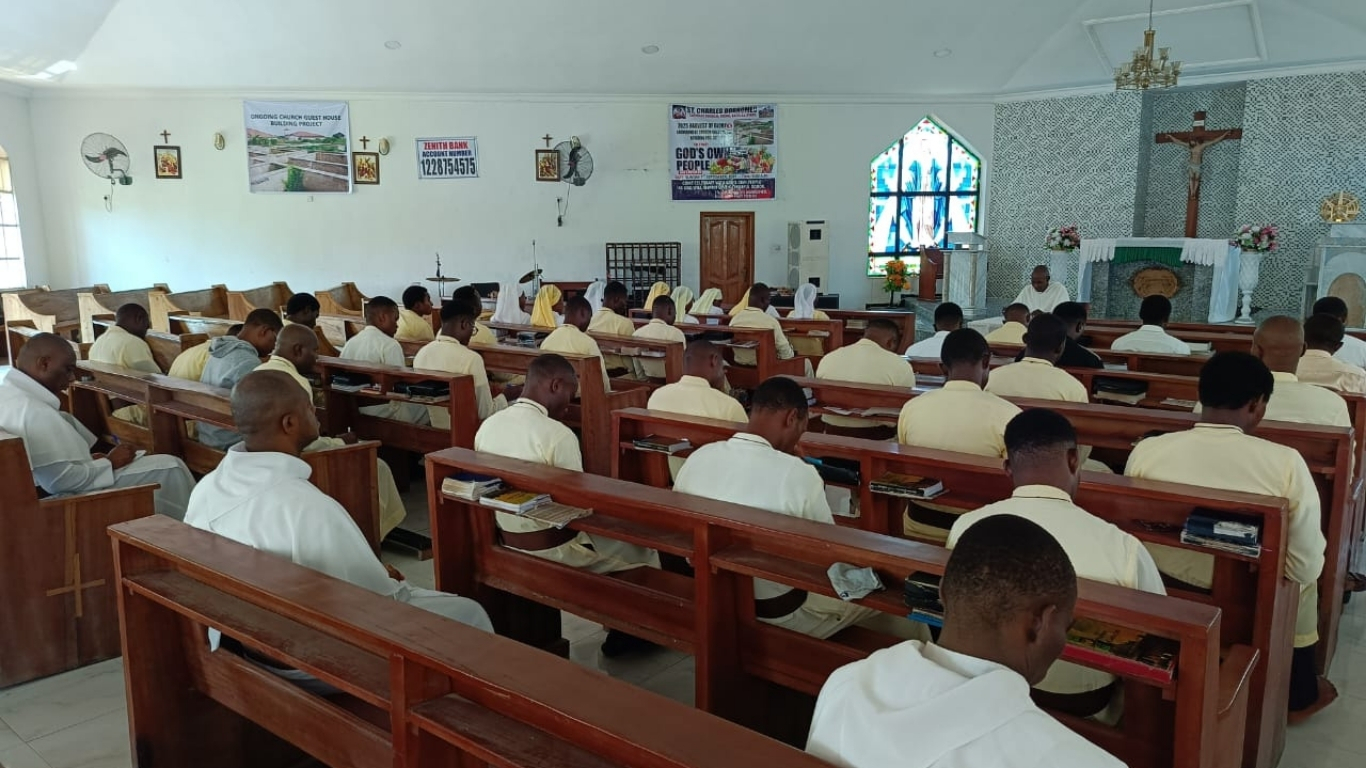
Formation within the Missionaries of Holy Trinity of the Poor follows the stages prescribed by the universal law of the Church for institutes of consecrated life, enriched by our own Constitutions and proper charism. This chapter presents first the canonical stages through which each member passes, and then the five dimensions of formation cultivated throughout every stage.
Stage 1: Aspirancy
Duration: 1 Year (May be extended to 2 Years) | Canon Law: Canon 597 § 2
Aspirancy is the earliest, informal period in which a candidate expresses interest in religious life and begins initial discernment before formal admission to the novitiate. The universal law of the Church does not treat aspirancy as a distinct canonical stage; it falls under the general principle of canon 597 § 2, which leaves the specific conditions for admission to an institute to be determined by both universal law and the institute's own proper law.
During aspirancy, the individual is introduced to the community's charism, spirituality, and way of life, while formators assess initial suitability, freedom, and right intention. This period lasts for at least one year, and may be prolonged for an additional year if the candidate is deemed to need more time to understand the weight of the decision before them.
Stage 2: Postulancy
Duration: 2 Years | Canon Law: Canon 597 § 1, Canon 642
Postulancy is the first formally structured stage of initiation, helping the candidate mature in vocational discernment while allowing the Institute to evaluate the qualities required by canon 642 — the necessary maturity, physical and psychological health, and suitability of character for this life.
Canon 597 § 1 states that any Catholic with a right intention, the qualities required by law, and no impediment may be admitted to an institute, and postulancy exists to verify these qualities prior to the novitiate. Our postulancy typically lasts two years and includes formation in general orientation, liturgy and community prayer, the order of the Mass, hymns and the lectionary, personal etiquette and decorum, the history and charism of the Institute, spiritual reading and exercises, catechism, and ongoing discernment of vocation with spiritual direction and counselling.
"Postulancy is the first formally structured stage of initiation, helping the candidate mature in vocational discernment while allowing the Institute to evaluate the necessary maturity, physical and psychological health, and suitability of character for this life."
Stage 3: Novitiate
Duration: 2 Years | Canon Law: Canons 646–653
The novitiate is explicitly regulated by canons 646–653 as the formal beginning of religious life, instituted so that novices better understand their divine vocation, experience the Institute's manner of living, and form their mind and heart in its spirit, while their intention and suitability are tested (canon 646).
Canon 650 § 1 specifies that the novitiate is oriented toward formation in Christian and religious perfection rather than external studies or works, and canon 652 places the novice under the direct guidance of a novice master or mistress. According to our Constitutions, the novitiate lasts two years, and includes formation in the Constitutions, liturgy, lectio divina, the history of religious life, the vows of chastity, obedience, and poverty, the theological and moral virtues, self-awareness, Church history, Sacred Scripture, mission, the documents of Vatican II, papal encyclicals, spiritual direction, community life, the lives of the saints, and three months of supervised apostolic work.
- The Vows: Chastity, Obedience, and Poverty
- Constitutions & Liturgy Formation
- Church History & Sacred Scripture
- 3 Months of Supervised Apostolic Work
- Documents of Vatican II & Papal Encyclicals
- Spiritual Direction & Community Life
Stage 4: Temporary Profession
Duration: 3–6 Years | Canon Law: Canons 654–657
Temporary profession, addressed in canons 655–657, marks the novice's first public profession of the evangelical counsels, incorporating them into the Institute as members. Canon 654 defines religious profession as a public act by which the person assumes the obligation of observing poverty, chastity, and obedience, is consecrated to God, and is incorporated into the Institute with the rights and duties defined by law.
Our Constitutions set this period at not less than three years nor more than six; upon its expiry, the member may be admitted to perpetual profession, have temporary profession renewed, or freely leave the Institute. This period includes ongoing community life and apostolate, renewal of vows, annual retreats and seminars, a three-month tertianship covering liturgy, discipleship, human development, sexuality, stress management, and Sacred Scripture, and, for those advancing toward Holy Orders, formation in ministries, human qualities, Christian virtues, apostolate and mission, practical and technical training, philosophy and theology, and pastoral formation.
Stage 5: Perpetual Profession
Duration: Lifelong | Canon Law: Canon 657 § 3, Canon 658, Canon 654
Perpetual profession is the definitive, lifelong incorporation into the Institute through permanent vows. Canon 657 § 3 anticipates this as the ordinary conclusion of temporary profession, while canon 658 requires that the candidate have completed at least three years of temporary profession and that admission be granted by the competent major superior with the consent of the council.
By its nature, perpetual profession has no set term: canon 654 makes clear that this profession, once validly made, binds the member for life, and can only be dissolved through the canonical processes for dispensation, transfer, or dismissal (canons 684–704).
Stage 6: Ongoing Formation
Duration: Lifelong | Canon Law: Canon 661
Continuing formation is mandated by canon 661, which requires religious to pursue spiritual, doctrinal, and practical formation throughout their entire lives, with superiors providing the necessary means and time. Within our Institute, this takes the form of tailored seminars, workshops, and further study, ensuring that formation remains a lifelong companion to ministry rather than a stage that is simply completed and set aside.
"Formation is a lifelong journey of love, prayer, penance, and service — a continuous path of growth in holiness and dedication to the poorest of the poor."
Formation Stages at a Glance
Formation follows the universal law of the Church for institutes of consecrated life, enriched by our own Constitutions and proper charism.